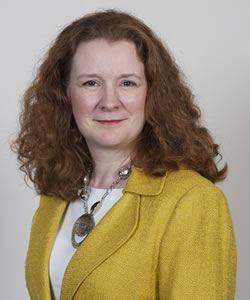
Dianne Lowther of Brilliant Minds has completed the final stage of assessment and has been awarded the Master Trainer of NLP qualification. This is the top level of qualification in NLP and reflects ‘the highest degree of competence and skill’. The work required to achieve this qualification is all self-directed and included running an NLP Practitioner programme under the observation of one of the assessors, the compilation of a portfolio of evidence and a lengthy interview. She was required to prove knowledge of NLP, teaching competence and innovations in the field.
Dianne’s knowledge of NLP was easy to demonstrate, not only is there a huge list of books on NLP and related subjects that she has read, she’s also written reviews of them for her ‘recommended reading’ lists. She was also able to supply articles she has written, both for the Brilliant Minds newsletter and for other publications. Her ability to apply NLP techniques is demonstrated in numerous testimonials from satisfied coaching clients.
Her teaching competence has been honed through almost 1000 days of NLP training she has delivered since qualifying as a Trainer of NLP in 1996. This includes public programmes and bespoke programmes designed for corporate clients. As well as delivering short, focused NLP programmes for a variety of audiences – including IT project managers, police officers and HR professionals – Dianne has also developed and delivered in-house Practitioner programmes. The first of these was for West Midlands Police in 2001, more recently she delivered a Practitioner programme to Directors and Senior Managers at Schaeffler (UK) Ltd and this autumn she will be delivering a tailored NLP Practitioner programme for a group of HR Managers in the Rail sector to help in the shift in emphasis of their role in line with David Ulrich’s HR Business Partner model. The success of these training interventions can often be seen not just in positive feedback from course participants but also in tangible improvements in business results.
When it comes to innovation, much of Dianne’s contribution to the field has been in developing ways to deliver NLP training to a business-oriented audience. She is probably the only NLP trainer in the UK who concentrates on bringing NLP to an Executive audience and as the origins of NLP lie in therapeutic psychology, this has meant finding relevance of the techniques in different contexts. To achieve this, Dianne has developed a number of new models, new training activities and a complete home-study programme for developing the language skills associated with NLP.
Achieving this qualification is a major milestone for Dianne. “It a goal I’ve been working towards for some time”, she says, “and although it took a long time to compile the portfolio of evidence it was also an opportunity to review what I’ve done over the past 13 years of training people to use NLP in the workplace. I’m proud of what I’ve achieved and I can also see areas that I’ve still to explore”.
For Brilliant Minds, Dianne’s qualification also represents a new business opportunity because as a Master Trainer of NLP, she is now authorised to train Trainers of NLP. Whether she decides to do this or not, it also distinguishes her as one of the best NLP Trainers in the UK.